
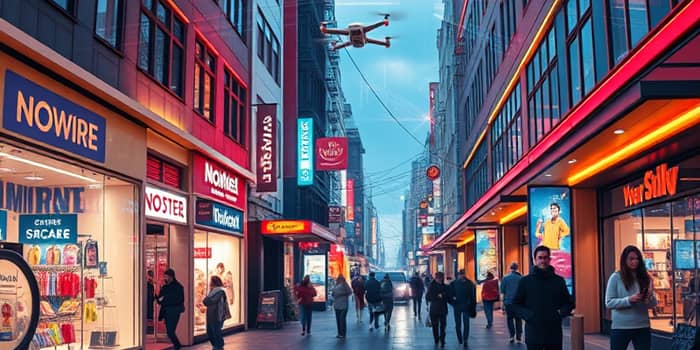
In the span of just a few years, the retail landscape has shifted dramatically. What once was dominated by physical high streets and shop windows is now a complex ecosystem where digital and brick-and-mortar experiences coexist and complement each other. This transformation is driven by evolving consumer habits, groundbreaking technologies, and a global market that now exceeds trillions of dollars in value.
As businesses large and small adapt to this new reality, the notion of a retail revolution is no longer hyperbole. It reflects a fundamental rethinking of how goods are discovered, purchased, and delivered. E-commerce is no longer a peripheral channel but a core strategy for survival and success.
By 2025, global e-commerce sales and growth are projected to reach between $6.8 trillion and $7.4 trillion, accounting for over one-fifth of all retail activity worldwide. More than 2.77 billion consumers—roughly 33% of the global population—are expected to shop online, while 28 million e-commerce sites compete for attention. Approximately 2,162 new stores launch daily, nearly half based in the United States.
These numbers underscore a retail revolution driven by convenience, choice, and cutting-edge logistics. Consumers now expect seamless online journeys, while businesses invest heavily in platforms, fulfillment, and data analytics to capture market share.
Far from being rendered obsolete, physical stores are evolving into vital components of an omnichannel framework. Traditional storefronts are reimagined as showrooms or mini-warehouses, where customers can pick up purchases, return items, or experience products before buying.
Retailers are embracing same-day delivery and click-and-collect models to meet rising expectations. Large chains repurpose underutilized square footage for order fulfillment, blending the immediacy of in-store shopping with the convenience of online orders.
Modern shoppers are more empowered than ever. A remarkable 82% now expect same-day delivery, and 65% of transactions are made using digital wallets and contactless payment adoption. On average, individuals spend 4.2 hours daily shopping on smartphones—double the time recorded just two years ago.
Social commerce is booming, with the US market projected at $114.7 billion in 2025. Video-first platforms like TikTok and Instagram are rewriting the rules of engagement, turning influencers into virtual storefronts. Voice commerce is also on the rise, expected to exceed $82 billion this year.
Certain product categories consistently lead online sales, reflecting consumer priorities and digital adoption rates. Electronics and fashion remain dominant, but home goods and groceries are gaining traction as technology improves logistics.
This table highlights the enduring popularity of high-value and high-frequency categories. As fulfillment and delivery networks improve, food and grocery segments are poised for further expansion.
Retailers are investing heavily in automation and intelligence. Nearly 89% of retail companies are piloting or adopting AI solutions, with the AI-powered e-commerce software market set to reach $8.65 billion. Chatbots, recommendation engines, and dynamic pricing tools deliver tailored experiences at scale.
Augmented reality has found its place in trying before buying, with 1.7 billion AR devices in use by 2024. Meanwhile, futuristic logistics—robotic warehouses, autonomous vehicles, and drone deliveries—are reshaping last-mile operations and reducing costs.
The rise of mobile-first strategies drive unprecedented growth across marketing, commerce, and payment channels. Retailers are optimizing every interaction for smartphones, ensuring that touchpoints from discovery to checkout are frictionless.
The digital transformation is not limited to global giants. Small and medium enterprises are finding unprecedented access to global markets. By 2025, 73% of small retailers plan to sell online, up from 45% just two years earlier.
These platforms empower startups and family-owned shops to compete on price, reach, and service quality. The result is a vibrant, diverse retail ecosystem where unique brands can thrive alongside established players.
With growth comes risk. Mobile-driven fraud accounts for 30–41% of e-commerce fraud costs, prompting investments in tokenization, advanced analytics, and first-party fraud controls. Data privacy regulations are tightening, requiring retailers to balance personalization with compliance.
Consumers are also demanding ethical and sustainable practices. From circular packaging to carbon-neutral logistics, retailers are integrating environmental responsibility into their value propositions.
As we look ahead, the retail revolution is poised to accelerate. Hybrid experiences, hyper-personalization, and logistics innovation will redefine consumer expectations. Businesses that embrace change, invest in technology, and prioritize customer-centric models will lead the next wave of growth.
In this era of unprecedented opportunity, the high street is not dying—it is evolving. By harmonizing digital and physical channels, retailers can create immersive, convenient, and responsible shopping experiences that resonate with the modern consumer.
References